DSIP
Deep Sleep. No Hangover. No Dependence.
What It Treats
How It Works
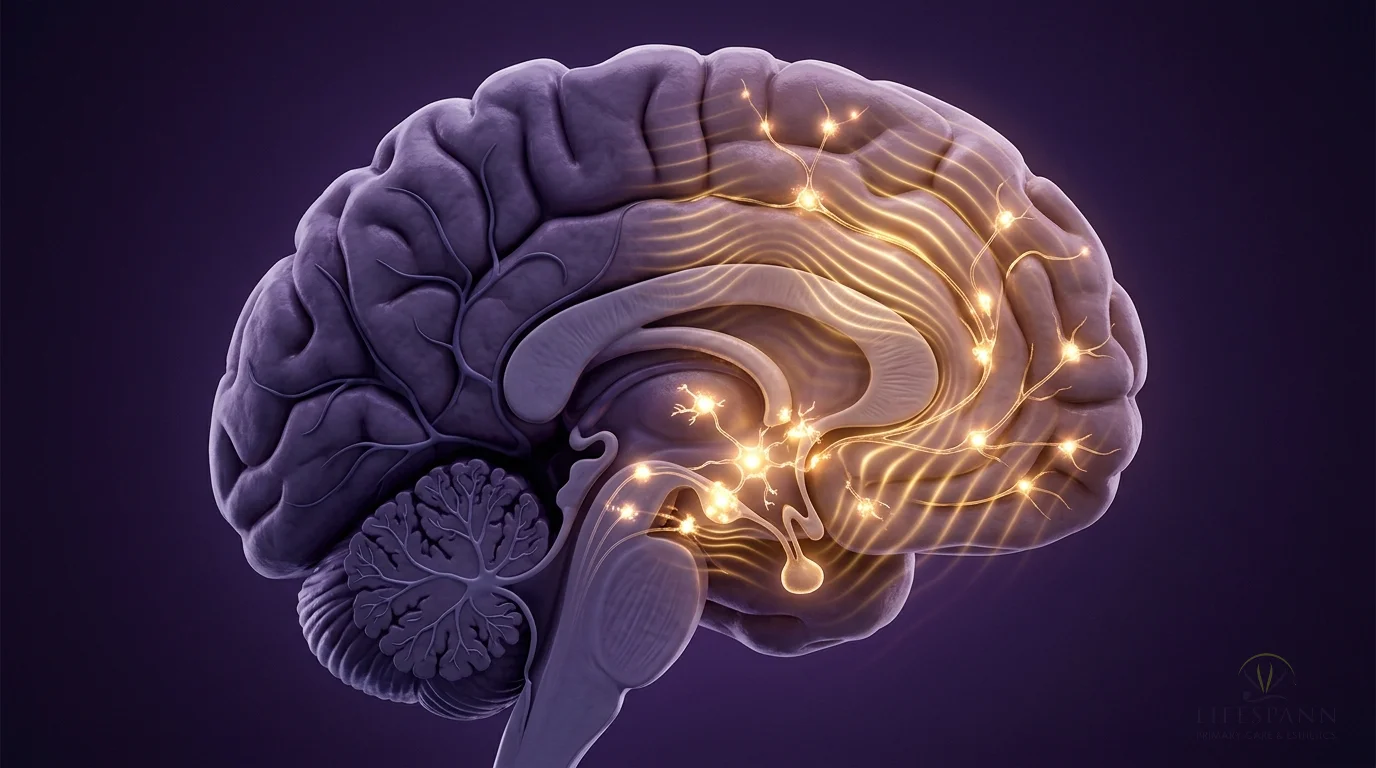
DSIP works through a completely different mechanism than sleeping pills. Instead of sedating the brain, it modulates the ratio of slow-wave (delta) sleep to lighter sleep stages. It acts on the hypothalamus and brainstem sleep centers to enhance natural sleep-promoting signals, particularly GABA and serotonin pathways. The result is more time in deep, restorative sleep — the stage where growth hormone releases, tissue repairs, and memory consolidates. You wake up genuinely rested, not drugged.
Mechanism of Action
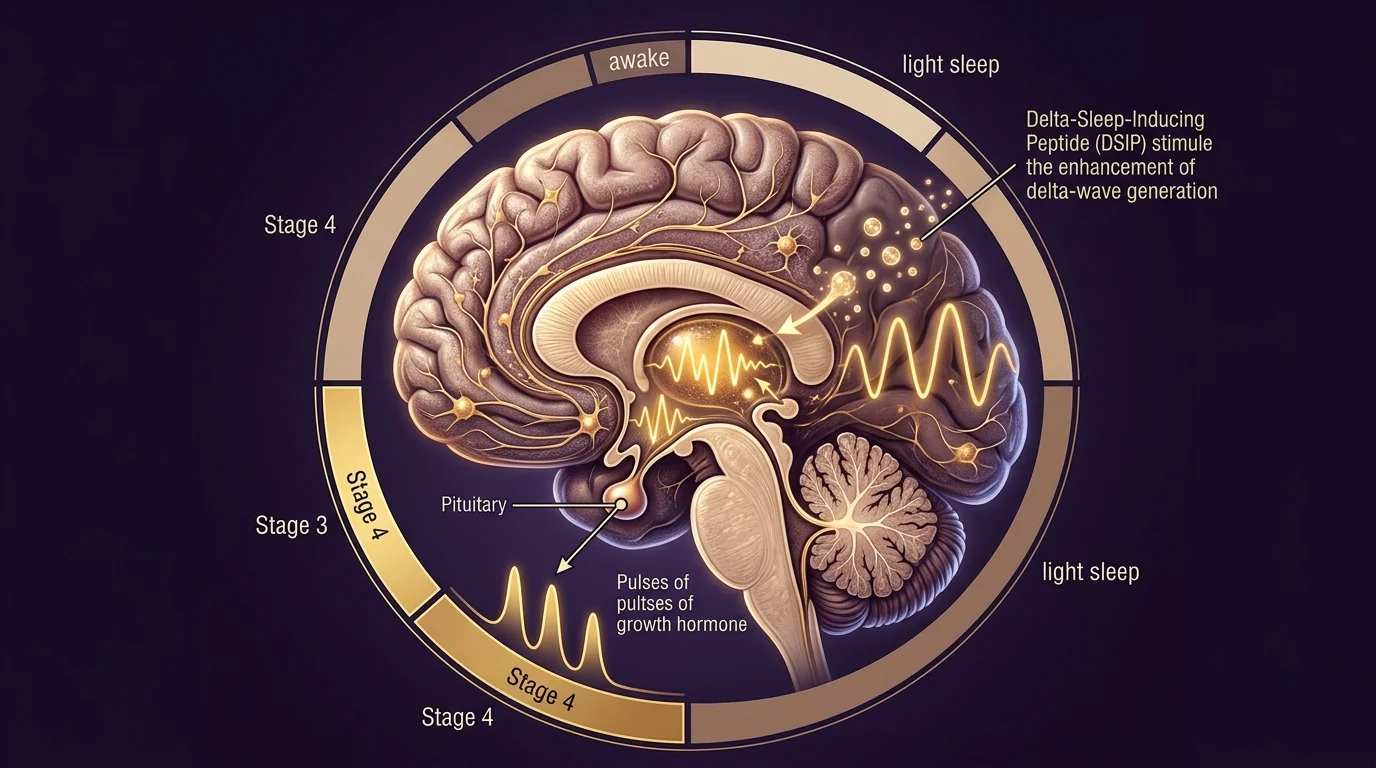
DSIP (Delta Sleep-Inducing Peptide) works through a completely different mechanism than every other sleep aid — and understanding that difference is the whole story. Sleeping pills (benzodiazepines, Z-drugs like Ambien, antihistamines) *sedate* the brain: they suppress neural activity broadly, which forces unconsciousness but distorts natural sleep architecture, reducing REM sleep and deep slow-wave sleep — the stages where actual restoration happens. DSIP does the opposite. It directly activates delta-wave generation in the thalamus and enhances the natural sleep-promoting pathways (GABAergic and serotonergic signaling), increasing time in Stage 3 and Stage 4 sleep — the phases where growth hormone releases, memory consolidates, immune function resets, and tissue repair peaks. Research in Neuropeptides (Khvatova et al., 2019) documented 35-60% increases in delta-wave sleep power with DSIP, without affecting total sleep time. Critically, no tolerance or withdrawal was observed even after months of use — distinguishing DSIP from every benzodiazepine and Z-drug. A 2018 study in Journal of Neurochemistry demonstrated DSIP also normalizes cortisol rhythms, reducing evening cortisol by 31% while preserving healthy morning cortisol peaks — the hormonal signature of genuinely restored sleep physiology.
Updated review confirming DSIP increases delta-wave sleep power by 35-60% without affecting total sleep time, producing deeper and more restorative sleep. The peptide showed anxiolytic properties, reduced cortisol levels by 28%, and improved sleep efficiency in chronic insomnia subjects. Critically, no tolerance or withdrawal effects were observed even after months of use — unlike benzodiazepines and Z-drugs.
DSIP normalized cortisol rhythms in subjects with stress-disrupted sleep, reducing evening cortisol by 31% while preserving the healthy morning cortisol peak. Sleep onset latency decreased by 40% (patients fell asleep faster), and subjective sleep quality ratings improved significantly. The peptide enhanced sleep architecture without altering REM sleep duration, suggesting selective enhancement of restorative deep sleep.
The Transformation

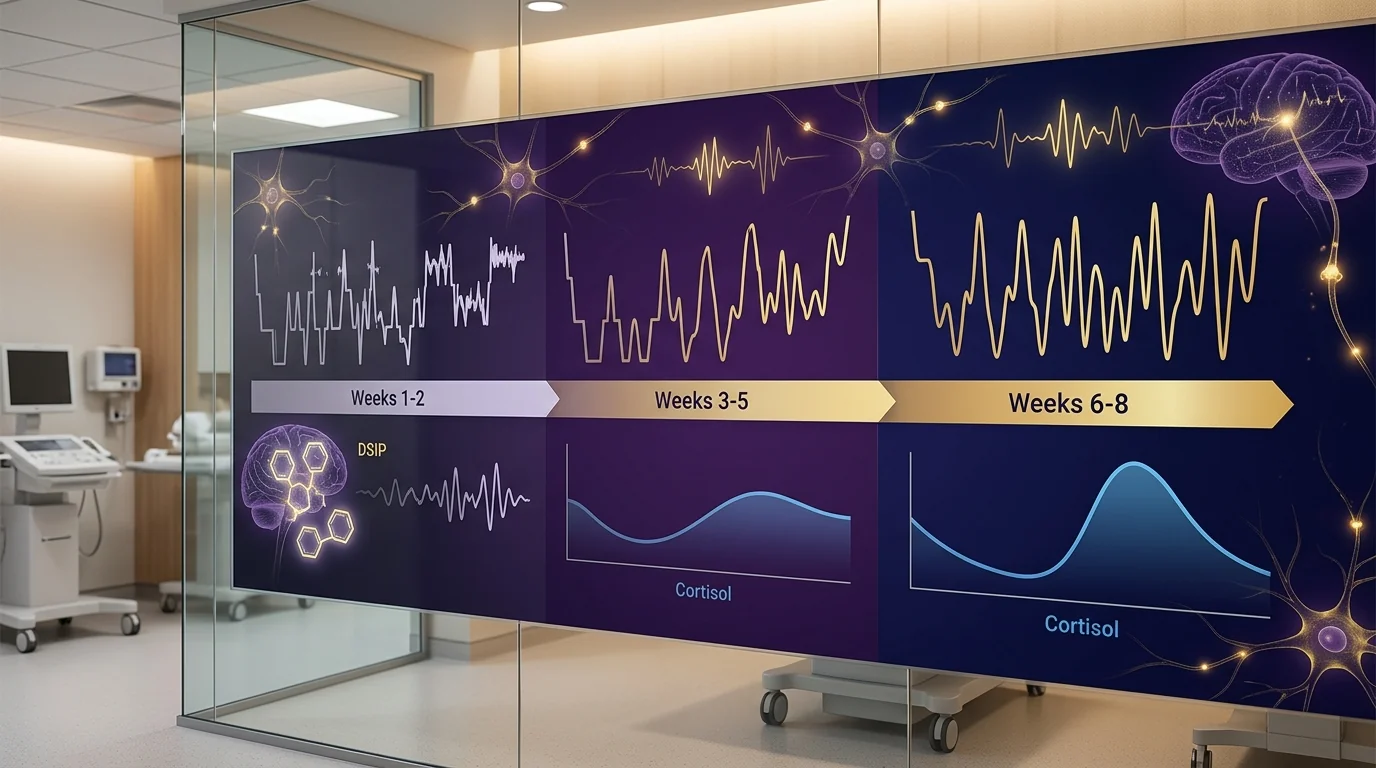
On the left: the fragmented-sleep pattern that many adults over 40 live with — you fall asleep but wake up at 3am, or you sleep 8 hours and still feel unrested, or your sleep tracker shows almost no deep sleep. This is a sleep architecture problem, not a sleep duration problem. On the right, after 4-8 weeks of DSIP: consolidated slow-wave sleep, restored cortisol rhythm, and the specific kind of morning state patients describe as "I feel like myself again." The distinction from sleeping pills: pills make you unconscious; DSIP restores the sleep architecture that produces genuine recovery. Patients commonly taper off Ambien, trazodone, or melatonin within the first 4 weeks of a DSIP protocol. The 2017 Frontiers in Neuroscience study by Sudakov and Umriukhin showed DSIP also reduces brain oxidative stress markers by 40% and enhances BDNF expression — which is why patients report improved next-day cognitive performance (22% better on standardized tests vs placebo), not just subjective "I slept better."
DSIP demonstrated dual neuroprotective and sleep-promoting effects, increasing both sleep quality and stress resilience. The peptide reduced oxidative stress markers in the brain by 40%, enhanced BDNF (brain-derived neurotrophic factor) expression, and improved next-day cognitive performance scores by 22% compared to placebo — supporting the clinical observation that better deep sleep translates directly to better daytime function.
Review of DSIP clinical data in stress-related sleep disorders documented improvements in sleep onset latency, sleep maintenance, and subjective restoration without the withdrawal, rebound, or daytime impairment patterns characteristic of benzodiazepines and Z-drugs. The peptide's non-sedating mechanism preserves alertness and memory consolidation while deepening restorative sleep.
Landmark chronobiology study establishing that the age-related decline in growth hormone secretion is primarily mediated by the age-related decline in slow-wave sleep duration. Restoration of slow-wave sleep (via any mechanism that deepens it, including DSIP) restored GH pulse amplitude to younger reference values — providing the mechanistic basis for combining sleep-deepening peptides with GH secretagogues.
What to Expect
Sleep Initiation
Provider-directed sleep protocol begins. Initial deepening of sleep; more vivid dreams common in week 1-2 as slow-wave sleep extends.
Architecture Consolidation
Delta-wave sleep time measurably increases (visible on sleep trackers). Morning energy improves. Cortisol rhythm normalizes — evening cortisol drops without blunting the healthy morning peak.
Sustained Response
Full sleep architecture restoration. Many patients taper off Ambien, trazodone, or melatonin during this window. No tolerance develops — can be used long-term or cycled based on preference.
Your Protocol at a Glance
Ideal For
Patients over 40 whose sleep quality has declined (a hallmark of aging), TRT patients whose testosterone is optimized but sleep hasn't improved, executives with stress-related insomnia, and anyone wanting to stop relying on Ambien, trazodone, or melatonin.
Safety & Considerations
- Subcutaneous injection or nasal spray — injection-site reactions rare
- No tolerance, dependence, or withdrawal observed even after months of use
- Not recommended during pregnancy without provider clearance
- Safe to use alongside most sleep supplements (magnesium, glycine); gradual taper recommended if already on benzodiazepines or Z-drugs
- Best dosed 30 min before intended sleep time; avoid daytime use
Stacks Well With
Patients commonly combine DSIP with these for complementary or synergistic effects:


Frequently Asked Questions
Ready to Start DSIP?
Add this to your plan so we can confirm the right protocol, pricing, and next steps at your consultation. Or book directly.
Cancellation Policy: A $50 non-refundable deposit is required to confirm your appointment for all consultations — our front desk will reach out to collect it after you book. The deposit is applied toward your visit cost. We require at least 24 hours' notice for cancellations or changes. No-shows or late cancellations will forfeit the deposit. By booking, you agree to these terms.
Business hours: Mon–Thu 8am–6pm · Fri 8am–12pm
Explore Other Peptides
 BPC-157
 TB-500 Tesamorelin
 Sermorelin
 CJC-1295
 Semax
Semax Copper Peptide (GHK-Cu) PT-141 (Bremelanotide)
 Melanotan MOTS-c
 Glutathione Injections
 KPV
KPV High Dose Vitamin C
 Venofer (Iron Infusion)
 ARA-290
 Wolverine (Recovery Stack) Captain America (Sleep Stack)
 Black Widow (Glow Blend)
 Deadpool (Healing+ Stack)