Do I need labs before starting TRT?
Yes. No labs, no TRT. We need symptoms, testosterone levels, blood count, PSA, estrogen, thyroid, and metabolic markers before deciding whether this is appropriate.

Bioidentical testosterone therapy for men with low T concerns — support energy, strength, mood, libido, and mental clarity. (For women, see Hormone Therapy for Women (HRT).)
Here is the deal with TRT: low testosterone is not diagnosed from one tired Tuesday and a gym plateau. But if libido is down, morning erections disappeared, recovery is slower, motivation is flat, and belly fat is creeping up, we should look.
We start with the full picture. Total testosterone matters, but free testosterone, SHBG, estradiol, PSA, LH/FSH, DHEA-S, thyroid markers, CBC, CMP, and metabolic markers tell us what is actually happening. Labs are the dashboard. Treating one number is how people get sloppy.
Treatment may include weekly testosterone injections or pellets for men who want less frequent dosing. The route is only one piece. We also look at estrogen conversion, hematocrit, prostate safety, sleep, fertility goals, medications, and follow-up response.
TRT is not a casual wellness add-on. It is a monitored medical plan. Done right, it is measured. Done wrong, it turns into side effects and confusion.
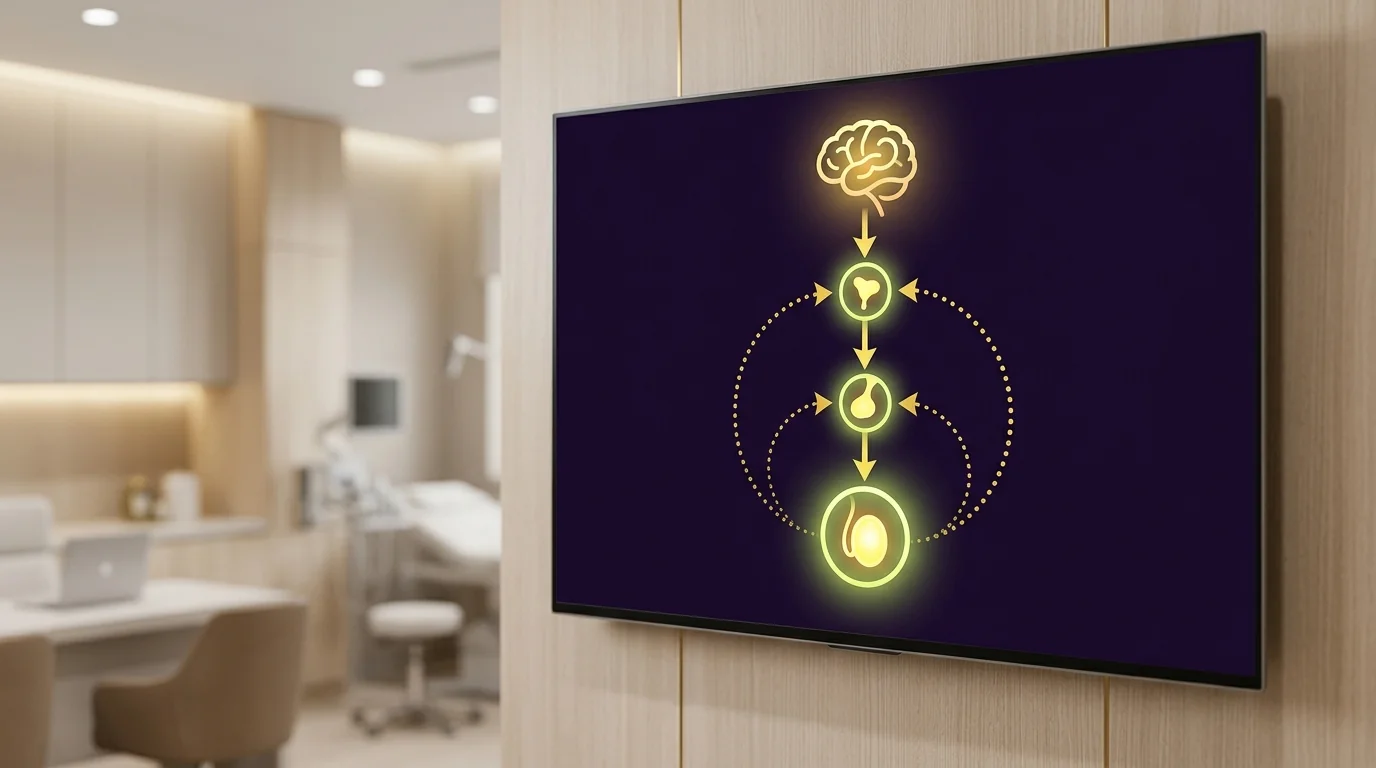
The hypothalamic-pituitary-gonadal (HPG) axis controls testosterone production. When natural production declines, TRT may support levels while we monitor the feedback loop.

Testosterone can affect energy, muscle, mood, cognition, libido, and body composition. We track symptoms and labs because response varies.
Total/free testosterone, SHBG, estradiol, PSA, LH/FSH, DHEA-S, thyroid, CBC, CMP. In-house blood draw.
Your provider reviews labs in detail, correlates with symptoms, and discusses treatment options.
Injection type/frequency, dose, and adjunct medications such as AI or HCG when appropriate.
Response review and dose adjustment. Post-pellet labs are ordered when clinically indicated and billed separately.
Ongoing labs, hematocrit monitoring, and dose adjustments. We follow the response instead of guessing.
This content is not an offer to sell, prescribe, compound, or distribute any medication, peptide, or compounded product.
Yes. No labs, no TRT. We need symptoms, testosterone levels, blood count, PSA, estrogen, thyroid, and metabolic markers before deciding whether this is appropriate.
Yes. Injections are adjustable and routine-based. Pellets are less frequent. Neither is automatically better; the right route depends on labs, goals, safety factors, and whether you will actually follow the plan.
Monitoring depends on route and response. We review symptoms and labs such as testosterone, estradiol, hematocrit, PSA, and overall safety markers.
Yes. Testosterone therapy can suppress sperm production. If future fertility matters, say that before starting, not three months later when we are trying to reverse-engineer the problem.
Use this page as a starting point for a provider conversation about fit, safety questions, and next steps.
Cancellation Policy: A $50 non-refundable deposit is required to confirm your appointment for all new patient consultations and procedures — our front desk will reach out to collect it after you book. The deposit is applied toward your visit cost. We require at least 24 hours' notice for cancellations or changes. No-shows or late cancellations will forfeit the deposit. A $75 fee applies for physical exam appointments not canceled with 24 hours' notice. By booking, you agree to these terms.
Business hours: Mon–Thu 8am–6pm · Fri 8am–12pm